
If a stump has sat in your yard for more than a season, it’s probably already trying to tell you something. New sprouts at the base, soft or crumbling wood, and pest activity nearby are common signs that it’s time for tree stump removal. Left alone, a stump can spread decay, draw termites, and turn into a safety hazard.
Most homeowners don’t think much about an old stump until it becomes a problem. It’s easy to mow around, easy to ignore, and easy to assume it will rot away on its own eventually. But a stump left in the ground rarely stays harmless for long. For the full breakdown of the process, cost, and timeline, our complete guide to stump grinding covers everything from start to finish. This article focuses on something more specific: the five signs that tell you it’s time to stop waiting.
What “Getting Rid of” a Stump Really Means
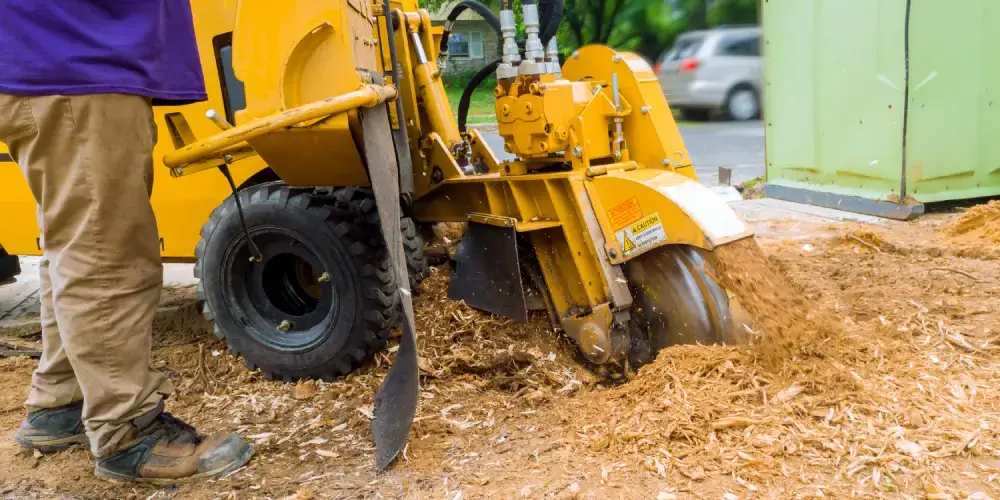
Tree stump removal means getting rid of a stump’s wood and root system so it stops affecting your yard. Most companies handle this through stump grinding, which shreds the stump down below ground level with a specialized machine. Full removal, sometimes called stump extraction, digs out the entire root ball and is far more invasive.
What Stump Grinding Involves
A grinder chews the stump down 6 to 12 inches below the surface, leaving behind a pile of wood chips and roots that break down naturally over time. It’s faster, less disruptive to your lawn, and costs less than full extraction.
What Full Stump Removal Involves
Full removal pulls the stump and its entire root system out of the ground, usually with an excavator. It leaves a bigger hole to fill and a bigger mess to clean up, but it clears the ground completely, which matters if you’re building on that spot.
Did you know? A stump’s root system stores carbohydrates the tree built up before it was cut. Some species draw on that stored energy to keep sending up new shoots for several years afterward.
5 Signs Your Stump Needs to Go
Not every stump needs to go the moment the tree comes down. But these five signs mean it’s time to call in professional tree stump removal before the problem grows.
Sign #1: New Shoots or Suckers Growing From the Base
Some tree species fight hard to survive. Maples, willows, and elms are especially known for sending up new shoots around a cut stump. Left alone, these suckers compete with your grass and can eventually grow into a cluster of small trees you never planted.
Sign #2: The Wood Feels Soft, Spongy, or Shows Fungus
Soft, crumbly wood and mushrooms growing at the base mean decay fungi are already breaking the stump down from the inside. According to Iowa State University Extension, natural decay can take a decade or longer depending on soil moisture and tree species, so waiting it out isn’t always a realistic plan.
Sign #3: It’s a Tripping Hazard or Mower Obstacle
A stump hidden under grass or fall leaves is easy to miss and easy to trip over. It’s also a mower’s worst enemy, and one bad hit can damage a blade or send debris flying.
Pro tip: If a stump sits within a few feet of a walkway, patio, or play area, treat it as a safety issue first and a landscaping issue second.
Sign #4: Ants, Termites, or Other Pests Have Moved In
Decaying stumps are a magnet for wood-destroying pests. Termites feed directly on the decaying wood. Carpenter ants tunnel through it instead to build nesting galleries. Either way, a stump close to your house can become a stepping stone toward your siding or deck. Research from Rutgers Cooperative Extension notes that stumps, mulch, and other cellulose debris near a structure raise the risk of subterranean termite activity.
Sign #5: You’re Ready to Landscape, Build, or Replant That Spot
Whether you want a fresh patch of lawn, a new garden bed, or a shed in that corner of the yard, a stump is almost always in the way. Grinding clears the space so you can move forward with your plans instead of building around an old problem.
Why Waiting Costs You More
Did you know? A stump doesn’t need to touch your house to be a termite risk. Colonies can travel underground from a nearby stump and reach wood siding, framing, or a deck within a year or two under the right soil conditions.
In our years grinding stumps across yards from Providence to New Bedford, the biggest regret we hear isn’t about the cost of the job. It’s that homeowners waited a season or two longer than they should have. By the time they called, the stump had already sprouted new growth, drawn carpenter ants, or settled into a spot they now wanted to landscape. A stump rarely gets easier to deal with the longer it sits.
Grinding vs. Full Removal: Which Fits Your Yard
| Factor | Stump Grinding | Full Stump Removal |
| Speed | A few hours | Half a day or more |
| Typical cost | Lower | Higher |
| Disruption to yard | Minimal | Significant |
| Roots left in ground | Yes, decompose over time | No |
| Best for | Replanting grass, most yards | New construction, foundations |
If you’re weighing the two options in more depth, our breakdown of stump removal versus stump grinding walks through which one fits different yard situations. And if budget is the deciding factor, our guide to what stump grinding typically costs has a full price breakdown.
What to Expect From Professional Stump Grinding
Most residential stump grinding jobs wrap up in a few hours, not days. A crew arrives, grinds the stump and major surface roots below ground level, and clears the wood chips if you ask them to. Your lawn stays mostly intact, and the spot is usually ready for topsoil and grass seed right away.
Pro tip: Ask your tree service whether they’ll haul away the wood chips or leave them behind. Some homeowners want the chips for garden mulch; others want a completely clean yard.
Ready to Deal With That Stump?
If you’re seeing new shoots, soft or fungus-covered wood, a tripping hazard, pest activity, or you’re finally ready to landscape that corner of the yard, the stump needs to go. Waiting rarely makes the job easier or cheaper, and it only gives decay, weeds, and pests more time to spread through your yard.
Ready to get started? Heritage Tree Solutions offers professional stump grinding across Rhode Island and Massachusetts, from Providence to New Bedford. Contact us today for a free, no-obligation estimate and get that stump out of your yard for good.
Frequently Asked Questions
How do I know if I need stump grinding or full stump removal? If you plan to replant grass or add light landscaping, grinding is usually enough since it clears the stump below the surface. If you’re building a structure or need the roots completely gone, full removal is the better fit.
Can a tree stump attract termites? Yes. Decaying stumps are a common food source for termites and a nesting site for carpenter ants, especially when the stump sits within a few feet of your house. Removing it early cuts off that food and shelter source before a colony gets established.
How long does it take for a tree stump to rot on its own? Natural decay can take anywhere from a few years to over a decade, depending on the tree species, soil moisture, and climate. Professional grinding removes the stump in hours instead of years.
Will new grass grow back after stump grinding? Yes. Once the ground is leveled, filled, and topped with fresh soil, grass seed typically takes root within a few weeks. Planting in spring or early fall gives the new grass the best chance to establish before harsh weather hits.