
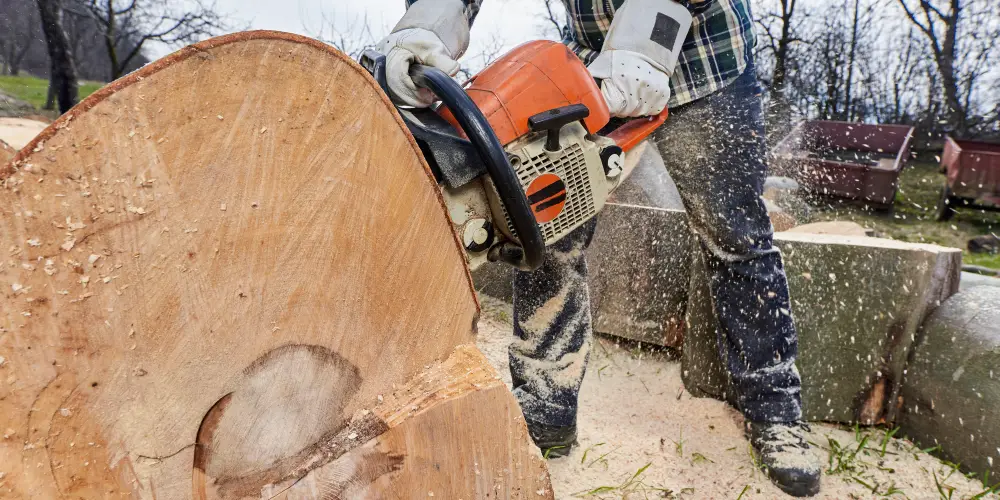
Stump grinding removes a leftover tree stump by chewing it down 6 to 12 inches below grade with a specialized grinder. Most jobs take under an hour for a single stump, and homeowners typically pay between $100 and $400 per stump. Here’s what the process looks like and how to know if it’s right for your yard.
If you just had a tree removed, or you’ve been looking at an old stump for years wondering what to do with it, you’re not alone. It’s one of the most common calls we get at Heritage Tree Solutions. Homeowners usually ask the same three things: how much will it cost, how long will it take, and will it wreck the yard.
How Much Does Stump Grinding Cost?
Price depends mostly on stump diameter and how far the roots have spread near the surface. A small stump under 12 inches wide often costs less. Large stumps with wide root flares, or stumps near a fence or driveway that need careful handling, cost more.
Pro Tip: Ask for a per-stump quote if you have several. Most crews, including ours, lower the price per stump once you’re grinding three or more in one visit.
Access matters too. A stump tucked behind a fence or downhill from the driveway can add time, since the grinder has to be walked in rather than driven.
How Long Does the Process Take?
A single stump on the smaller side can be ground in 15 to 45 minutes once the crew is set up. Larger stumps, especially hardwoods like oak or maple, can take an hour or more because the wood is denser and harder to cut through. Setup and cleanup usually add another 20 minutes on top of that.
Did You Know? A stump doesn’t need to be fully removed to stop new growth. Grinding it below the root collar, the point where roots meet the trunk, is enough to stop sprouting for good.
What Actually Happens During Stump Grinding
The process follows a set order:
- Site check. The crew looks for buried utility lines, irrigation pipes, or septic components near the stump before starting.
- Grinding pass. The grinder wheel works from the outside edges inward, chewing the wood into chips as it goes below grade.
- Root flare removal. Surface roots radiating out from the stump get ground down too, so nothing pokes up through the grass later.
- Backfill. The hole left behind gets filled with wood chips and topsoil, then leveled.
One decision we make on every job that surprises a lot of homeowners: we always grind past the root flare, not just the visible stump. A lot of crews stop at the trunk and call it done, but leftover root flare near the surface is exactly what pokes back through the lawn a season later, or catches a mower blade. Grinding that extra ring takes more time, but it’s the difference between a job that looks finished today and one that’s actually finished.
Will Stump Grinding Damage My Yard?
Done right, stump grinding is far less disruptive than digging a stump out. The grinder stays focused on the stump and its immediate root flare, so the surrounding lawn stays largely untouched. Full stump removal, by contrast, means excavating the entire root ball. That tears up a much bigger patch of yard and often needs new soil and sod afterward, according to the International Society of Arboriculture, the leading authority on tree care standards.
Did You Know? Wood chips from your ground stump aren’t waste. They break down into usable mulch, and most crews will leave a small pile for your garden beds if you ask.
Stump Grinding vs. Leaving It Alone
Some homeowners wonder if they can just skip it. Left in place, a stump can attract termites and carpenter ants, become a tripping hazard, and sprout new growth around its base for years. It also blocks you from planting anything new in that spot until the root system breaks down naturally, which can take years.
| Option | Timeline | Yard Impact | Cost |
| Stump grinding | Same day | Minimal | $100–$400/stump |
| Full stump removal | 1–2 days | Significant | $300–$800/stump |
| Leave it alone | Indefinite | Ongoing hazard, no planting | $0 upfront |
Cost estimates above reflect typical national ranges reported by Angi’s 2026 stump grinding pricing data, though your quote will depend on stump size and site access.
When to Call a Professional
DIY stump grinders are available to rent, but they’re heavy, kick up debris, and take experience to angle correctly around root flares. If you have more than one stump, a stump near a structure, or a stump with roots that have grown into a septic line or fence footing, it’s worth learning more about professional stump grinding services before renting equipment yourself.
Pro Tip: If you’re planning to plant a new tree in the same spot, tell your crew before they start. They can grind deeper and clear a wider radius so the new roots have room.
For homeowners weighing a full tree removal alongside stump work, it helps to understand the broader tree removal and care process first, since many jobs combine both services in one visit.
Stump grinding is also often the last step after trimming or removing damaged limbs. If your tree needs professional trimming or pruning before it comes down entirely, that’s worth tackling first.
Getting Started
Stump grinding looks simple from the yard, but the real cost and timeline depend a lot on what’s happening underground. A quick site visit gives you a straight answer, no guessing required.
If you’ve got a stump, or five, that’s been bothering you, reach out for a free estimate and we’ll walk your property before any work begins.
Frequently Asked Questions
How much does it cost to grind a single stump?
Most single stumps cost between $100 and $400, depending on diameter and root spread. Stumps near structures or with dense root systems can run higher. Grinding several stumps in one visit usually lowers the per-stump price.
Can grass grow over a ground stump right away?
Yes. Once the hole is backfilled with chips and topsoil and leveled, grass or sod can typically go in within a few weeks. Full decomposition of remaining roots underground takes longer but doesn’t affect surface planting.
Is stump grinding better than full stump removal?
For most yards, yes. Grinding is faster, cheaper, and less disruptive to surrounding grass and landscaping than digging out the entire root ball. Full removal is usually only needed if you’re building on that exact spot.
Do I need a permit to grind a stump?
Most residential stump grinding doesn’t require a permit since no tree is being cut down. Rules vary by town, so it’s worth a quick call to your local building department if you’re unsure.